
Fan The Spark

Category

Relationships

A small gathering of essays under relationships.

Vaisesika Dasa

Vaisesika Dasa·April 22, 2026
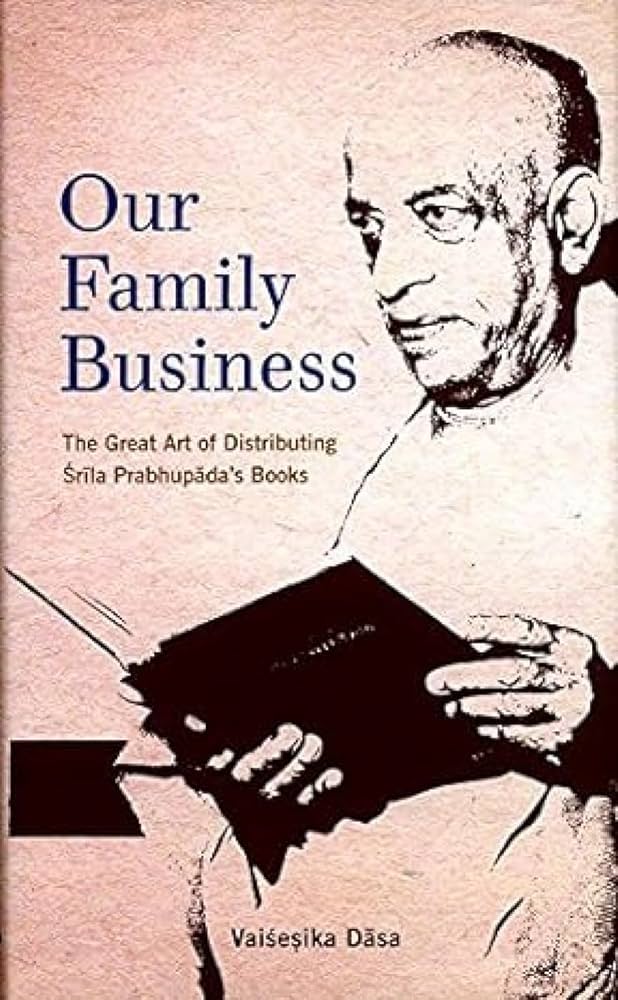
A painted book cover of a family at a hearth, navy and gold.
Our Family Business — a reading companion.

Every family is in some kind of business together. The visible part may be a shop, a profession, a farm, or simply the daily running of a household. But underneath that, every family is also producing something less visible — a culture, a memory, a set of values that the children will carry, half-consciously, into the rest of their lives.

Our Family Business is a small book about taking that second, hidden enterprise seriously. It proposes that the central work of a devotional household is not to add bhakti as one more activity on a busy calendar, but to reorganize the household's quiet inner economy around it — what we read aloud, what we eat, how we begin and end the day, what we celebrate, what we forgive.

What the book is really about

It is a manual, in the gentlest sense of the word. It walks through the small, repeatable practices that turn a home into a place of refuge: cooking and offering food with care, gathering for a few minutes of chanting, reading a verse together, keeping the festivals, welcoming guests as if they were sent. None of these are dramatic. All of them, kept up over years, change a family.

A reading companion, not a summary

These notes are not a substitute for the book itself. Think of them as a slow walk around the building before going inside. If something here moves you, the book is where the actual rooms are — with their furniture, their windows, their light.

Adapted from Our Family Business by Vaisesika Dasa.
Permalink

Vaisesika Dasa

Vaisesika Dasa·December 15, 2025

Once, my wife and I stayed at a friend's apartment, where every closet was full of clothes still wearing their price tags, and the spare room held boxes of shoes that had never touched the street. She was, gently, in pursuit of a perfect outfit — convinced that if she could only assemble it, the right kind of joy would arrive on its own.

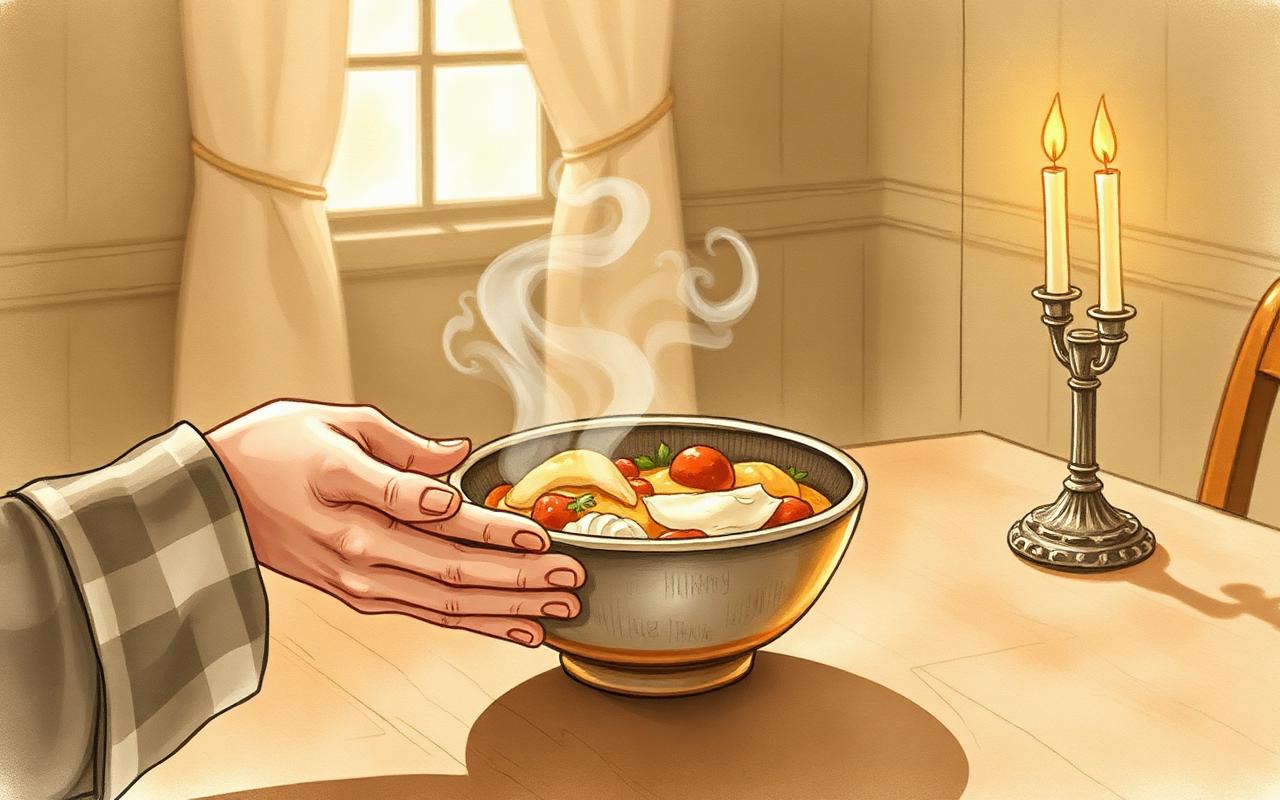
Two hands offering a steaming bowl of food across a wooden table by candlelight.
An ordinary table, an ordinary bowl, an ordinary hour.

I forgot all about her until, years later, I went into a shop for one pair of walking shoes. The salesperson appeared with two boxes and asked, almost casually, yellow or blue? Within a single second I had said yellow, then blue, then yellow again. On the way home I was still rehearsing the choice. I should have taken the blue.

Looking outside for what is inside

Spiritual beings, dressed for the moment in material bodies, struggle with material choices for as long as we mistake the costume for the wearer. Krishna says it as plainly as possible: the soul puts on new garments, giving up old ones, the way a person puts on new clothes. The shoes in my friend's apartment, and the small panic in mine, are, in that sense, the same kind of search.

The simple secret

Dale Carnegie, writing in another tradition entirely, arrives at the same conclusion as the bhakti texts. The fastest way out of one's own anxiety, he says, is to think of doing something good for someone else. The moment that thought is taken seriously, the small loop of self begins to loosen.

Once, as a young monk, I arrived at the lunch hall unusually hungry, only to find that the monk on serving duty had not appeared. I knew it was my turn to step in. I also knew I had wanted very much to sit down. Remembering my teacher's line — selfless service satisfies the soul's hunger — I picked up the ladle and began to serve. The longer I served, the less hungry I became, and the more clearly the room itself seemed to settle.

This is what bhakti yoga calls, in its older language, the yoga of love and gratitude. Practiced gently and often, it widens. Adapted from a reflection by Vaisesika Dasa.

Permalink